

If you're a customer service professional, you likely know the basics of AI customer service: it makes 24/7 support possible, it handles volume at scale, and done right, it can personalize interactions in ways a human team alone never could.
But the conversation has moved past the basics. AI isn't just a tool for customer service anymore. It's a catalyst for transforming your entire business.
The evidence bears this out. 92% of businesses expect to increase their AI investment in CX over the next 12 months, and the organizations moving fastest aren't just automating support tickets. They're using AI to drive revenue, reduce churn, and build customer relationships that compound over time.
This is the era of agentic customer experience , where AI agents don't just respond to customers, they act on their behalf. They access systems, resolve issues end-to-end, and operate consistently across every channel.
Here's how to build a customer service operation that doesn't just keep pace with expectations, but sets the standard.
Agentic CX in 2026: What consumers expect and most enterprises miss
There’s a common assumption that consumers are skeptical of AI in customer service. The data says otherwise. Our 2026 report surveyed 2,000 consumers to understand how people actually experience AI in customer service today.
Read reportBusinesses that embrace this mindset will unlock growth opportunities across the board, while others risk being left behind, simply automating support tickets.
So now that you know that AI isn’t just about automating tasks (it’s more about redefining how businesses operate and grow) let’s take a closer look at the transformative power of AI in customer service. Here’s how to take your business beyond ticket resolution to driving measurable impact across your entire organization.
What is AI customer service?
AI customer service goes beyond simple automation to deliver faster, smarter, and more personalized interactions. While traditional chatbots can only provide basic responses, AI solutions have evolved into sophisticated AI agents that understand customer queries, solve complex problems, and offer seamless support across channels.
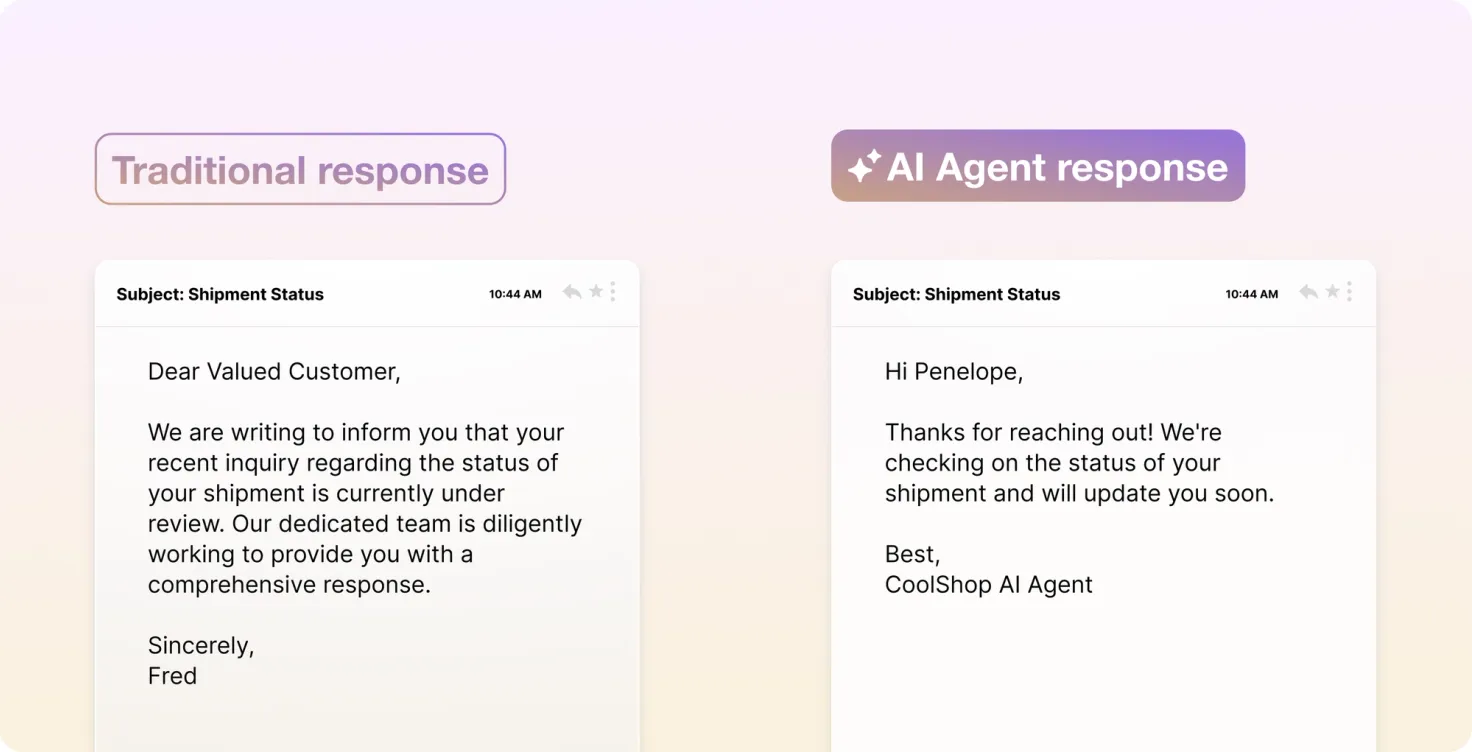
To understand the evolution, let’s compare chatbots, AI chatbots, and AI agents.
Traditional chatbot: Basic automation
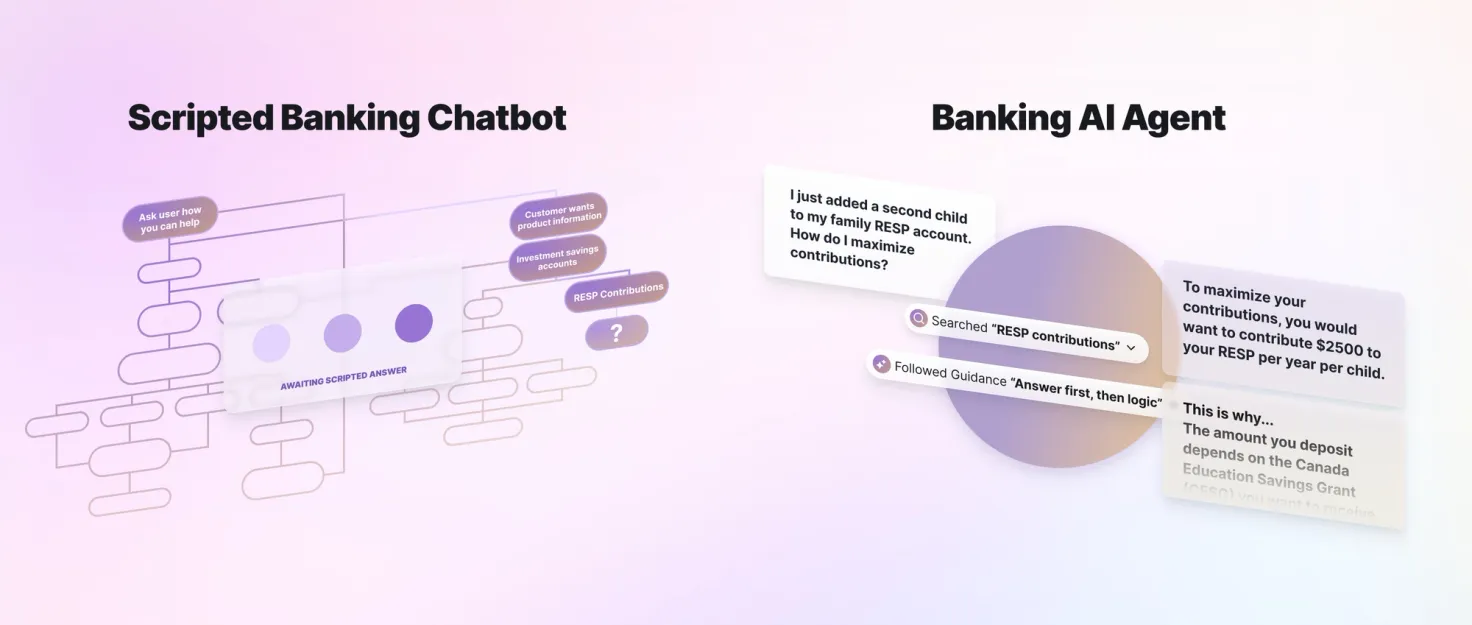
Chatbots are rule-based programs designed to handle simple, scripted tasks. They follow a predefined set of instructions to answer common questions or execute simple commands.
For example, a traditional chatbot on an ecommerce site may provide automated responses to questions like "What’s the status of my order?" or "How do I return an item?" But if a customer asks a more nuanced question, such as "Can you suggest a gift based on my previous purchases?" the chatbot would likely fall short – it can only respond with a set reply based on preloaded information.
This results in a limited customer experience when customers deviate from expected questions.

AI chatbot: Smarter interactions
AI chatbots represent a more advanced version of traditional chatbots, using Natural Language Processing (NLP) to understand the intent behind customer queries. They are capable of answering a broader range of questions and can learn from interactions to improve over time.
While still limited by the scope of their training data, AI chatbots offer a step up in terms of handling more varied and slightly complex queries.
An AI chatbot for a SaaS company could assist users by answering questions about software features or offering basic troubleshooting steps based on keywords in the query. For instance, if a user asks, "How do I reset my password?" the AI chatbot can guide them through the process, even if the phrasing of the question varies slightly.
AI agent: Comprehensive, omnichannel support
AI agents take AI chatbots to the next level by combining NLP, machine learning, and advanced integrations to deliver a human-like experience. Unlike basic or even AI-enhanced chatbots, AI agents can handle complex tasks across multiple channels—including voice, email, chat, and social media—without missing a beat.
They not only respond to queries but also solve problems by accessing backend systems, pulling data from multiple sources, and taking action on behalf of the customer. AI voice agents for customer service extend this to phone interactions, handling complex, multi-step conversations with the same intelligence and consistency as chat or email.
Consider John, a customer traveling in Japan who needs to resolve a software issue urgently. When he calls the support line, the AI agent recognizes his account, listens to his problem, and provides a voice-based solution in real-time. If poor connectivity forces John to switch to email, the AI agent continues the conversation seamlessly, responding to his inquiries instantly, even in the middle of the night.
The AI agent’s ability to integrate across channels and offer consistent support makes it a powerful tool for scaling omnichannel customer service while keeping the experience personal.
What makes this possible at scale is the underlying reasoning infrastructure. Ada's unified Reasoning Engine™ powers AI agents across every channel with a single, consistent decision framework, so the same customer question gets the same accurate, brand-safe answer whether it's asked via chat, email, or voice. This "build once, perform everywhere" approach is what separates truly scalable AI from a patchwork of siloed tools.

In a nutshell
- Chatbot: Rule-based, limited to scripted responses. Good for basic inquiries but lacks flexibility.
- AI chatbot: Uses NLP to understand intent, capable of handling varied questions with some level of learning. Can manage simple troubleshooting but still has limitations.
- AI agent: Advanced AI that provides omnichannel support , can solve complex problems, and performs actions across multiple platforms. Learns from every interaction, continuously improving and personalizing the customer experience.
AI agents represent the future of AI customer service, offering the "golden ticket" to scaling support, reducing costs, and delivering exceptional customer experiences that make your brand stand out.
Why AI is table stakes for modern customer service
Using AI for customer service is no longer a differentiator—it's table stakes. Basic automation tools aren't enough anymore, and simply experimenting with AI won't cut it.
Chatbots excel in sourcing information and workflows from their training data and presenting it in a user-friendly manner, but their capacity for reasoning is non-existent. They rely fully on human instruction.
Now that we have AI agents—sophisticated, problem-solving powerhouses capable of reasoning through complex queries—having advanced AI isn’t a luxury, it’s the baseline requirement for any customer-centric business. Here’s why.
Customers hate to wait
Ask your support team about their biggest challenges. The customer’s demand for instant responses will likely come up as a top challenge. Customers want near-instant responses across all channels:
- 38.3% of customers expect a response over email in less than an hour
- 39% of customers expect a response over social media within two hours
- 59% of customers are more likely to buy a product if they receive a response over chat in under a minute.
Meeting these expectations is nearly impossible when you’re juggling multiple channels with a small team. That’s where AI steps in.
“AI agents are designed to intelligently reason through problems, learn from interactions, and make decisions. They can act autonomously, apply learned knowledge to accomplish tasks, and solve problems in real-time — making your customer service go from ordinary to extraordinary.”


AI agents can handle thousands of inquiries simultaneously, from basic FAQs to more complex issues like troubleshooting a potential bug, without any human intervention. By offloading routine tasks to AI, you can dramatically reduce response times and free your team to focus on higher-value interactions.
Personalization is costly, but essential
Today’s customers expect brands to know their preferences, understand their purchase history, and deliver personalized experiences throughout the buying journey.
According to McKinsey , consumers associate personalization with positive experiences where brands demonstrate an investment in the relationship — not just the transaction. But generating personalized responses for thousands of daily inquiries is resource-intensive and can lead to long wait times if handled manually. That’s why 89% of business leaders view personalization as crucial for success, and 88% are planning to adopt AI and machine learning tools in the near future.
Yet, personalization needs vary across the customer lifecycle:
- 38% want personalization during the discovery or research phase
- 42% expect it while making a purchase
- 47% value it most after the purchase
AI can dynamically adjust its level of personalization based on where the customer is in their journey, ensuring the experience feels tailored without overwhelming your resources. Companies that struggle with AI-based personalization often miss these nuances, resulting in generic or misaligned customer experiences.

Omnipresence is the new normal
Customers expect a seamless, uninterrupted experiences across multiple channels . If they start a conversation on chat and need to continue it via email, they don’t want to repeat themselves.
But only 42% of customers report being "very satisfied" with the communication options businesses provide, largely due to a lack of channel consistency and convenience.
The solution is not to multiply your support efforts but to unify them. An AI agent offers centralized control over all channels, consolidating support efforts and automating responses across chat, email, phone, and social media.
For example, if a customer named John abandons a chat about a new feature and later follows up via email, the AI agent can pick up right where the chat left off, answering his question directly instead of starting the conversation from scratch.
Lean cost structure, maximum impact
$40,000 base plus additional pay. That’s how much a single service representative costs you.
While representatives are a crucial part of your customer service infrastructure, you don’t need a whole army to deliver high quality service. What you need is a scalable AI agent that can deliver exceptional service at the same cost, whether you have 100, 500, or 1,000 clients.
Most support agents are actually pro-AI. By handling routine queries, AI frees up agents’ time to dedicate to more challenging and rewarding areas of the job. That, and the fact that AI’s proven to elevate the quality of service while reducing operational costs, is why 47% of businesses cite lower cost per interaction as a direct AI outcome , and 43% report scaling their support without increasing headcount.
Things to consider when automating customer service with AI
Before diving into AI implementation, it’s essential to build a strong foundation to ensure a successful rollout. Here are key areas to focus on before investing in an AI agent.
1. Initiate dialogue with your support team
Training employees on AI customer service tools starts with getting ahead of their concerns. Introducing AI raises questions about job security and skill requirements—fear that can hinder team buy-in and make implementation more costly if left unaddressed.
36% of CX leaders say their team is not adequately resourced and skilled to manage, audit, and coach AI agents . A hurdle to overcome, to be sure, but a manageable one. Start by involving your support team early in the process.
- Encourage open communication: Create an environment where employees can ask questions and express concerns about the impact of AI on their roles. Address worries directly and reassure the team that AI is intended to complement their work, not replace them. Explain how AI will handle repetitive tasks, freeing up agents to focus on complex, high-value interactions that require human empathy and expertise.
- Highlight skill development opportunities: Position AI as an enabler that will allow support staff to expand their skill sets, rather than a replacement. Provide training programs to bridge the skill gap and equip your team with the knowledge to manage AI-powered workflows effectively.
2. Address trust concerns and ethical concerns
While AI technology is advancing rapidly, it still has limitations, including the potential for hallucinations (incorrect or nonsensical outputs) and biases. There are also legitimate concerns around data security, particularly when handling sensitive customer information.
- Choose AI tools with built-in safeguards: Not all AI tools are created equal. Before adopting an AI solution, conduct thorough research to ensure it has mechanisms to minimize errors, bias, and hallucinations. Look for AI systems with certifications in data security and robust privacy protocols.
- Implement ethical AI practices: Following the lead of top companies, 54% are addressing data privacy and ethical considerations by implementing data platforms with strong privacy controls. As 89% of business leaders predict, ethical AI use will soon be a competitive advantage. Make ethical AI practices a core part of your strategy to build trust with both your team and your customers.
Ada's Trust and Safety framework—including SOC 2 Type II, GDPR, and HIPAA certifications—is designed specifically for enterprise-grade AI deployment.
the privacy, data, and security risks of AI agents
Alleviate the fear that’s holding you back from modernizing customer service
Get the guide3. Ensure data quality and diversity
The quality and diversity of your data are crucial for training an AI agent that delivers accurate and unbiased responses. Many large language models (LLMs) are trained on outdated or limited data, which can introduce errors and bias into generated responses.
- Conduct a data audit: Begin by auditing your existing data sources, such as CRM records, support emails, and chat logs. Clean up duplicates, outdated information, and any irrelevant content. This ensures the AI agent is trained on high-quality data that reflects the current state of your business.
- Standardize data across sources: To maintain consistency, establish rules for data entry and standardize formats (e.g., dates, customer names). Integrate knowledge base software with your AI agent and use optimized algorithms, such as TF-IDF or BERT embeddings, to improve content retrieval and response accuracy.
- Incorporate diverse data sources: Your AI agent should learn from a variety of data sources that reflect different customer types, demographics, languages, and communication styles. For example, if you serve a global audience, ensure your training data includes inputs from various regions and cultural contexts. Also, pull data from multiple support channels like phone, chat, and email to create a well-rounded knowledge base.

AI customer service for SaaS
AI agents have the potential to address some of the most significant challenges faced by SaaS businesses today. With the right strategy, AI can transform customer support from a reactive function to a proactive, growth-driving asset.
Here’s how AI customer service can be used effectively in SaaS .
Instant responses to complex queries
While AI is already capable of handling straightforward requests like password resets, the true power of AI in SaaS lies in its ability to manage more sophisticated queries.
SaaS customers often face technical challenges, such as configuring API integrations or troubleshooting issues with conditional logic in automated workflows. With advanced AI agents, these complex inquiries can be resolved instantly, without needing to escalate to a human agent.
The key to achieving this level of support is leveraging high-quality training data and using a robust AI platform. By continuously training your AI agent with diverse and comprehensive datasets, you can ensure it is equipped to handle nuanced questions and provide accurate, context-driven solutions.
This not only reduces wait times for customers but also frees up your support team to focus on more strategic initiatives, such as optimizing customer experiences and enhancing product features.

Personalized support at scale
The ability to deliver personalized support at scale is one of the biggest advantages of AI in customer service. AI agents can automatically pull information from your CRM, search through your knowledge base, and analyze customer history to generate tailored responses that address each user's specific needs.
This approach leads to:
- Higher retention rates: By providing timely, relevant support, customers are more likely to stick with your service.
- Improved customer experiences: Personalization makes customers feel understood and valued, which boosts satisfaction.
- Optimized workflows: The AI agent can perform "warm transfers" when necessary, handing off a conversation to a live agent along with all the relevant context, such as previous chat history and customer details. This makes it easier for the support team to resolve complex issues quickly.

Enriched onboarding experiences
A critical factor in SaaS success is guiding new users through the onboarding process effectively. AI agents can play a pivotal role by offering personalized, interactive onboarding experiences that cater to each user's unique needs.
- Tailored onboarding processes: AI can customize the onboarding journey by drawing on existing user profiles in your CRM. This ensures that new customers receive guidance that is relevant to their specific use cases, making their initial experience smoother and more impactful.
- Interactive tutorials and feature walkthroughs: An AI agent can guide users through essential features step-by-step, providing tips and best practices along the way. Later in the customer journey, the AI can proactively suggest premium features that might be beneficial, offering a preview to encourage upgrades.
As AI agents manage these onboarding interactions, they collect valuable data that enhances their ability to personalize future experiences. This continuous learning not only improves the AI's reasoning engine but also boosts conversion rates by making the onboarding process more engaging and relevant to each user.
Boosting efficiency across channels with monday.com
After implementing Ada's AI Agent, monday.com saw immediate improvements in the performance and flexibility of their customer service.
See their storyAI customer service for FinServ
Financial services companies operate in a highly competitive and regulated market where customers expect quick, secure, and personalized support. AI can help address the unique challenges in this industry, enhancing customer satisfaction while ensuring compliance and efficiency.
Here’s how AI customer service can be used effectively in FinServ.
Real-time fraud detection and resolution
In the financial services space, security concerns are paramount. AI agents can help detect and respond to suspicious activity instantly by analyzing transaction patterns, user behavior, and account activity in real-time.
If unusual behavior is flagged—such as multiple failed login attempts or an uncharacteristic transaction—an AI agent can alert the user, request additional verification, or temporarily lock the account to prevent fraud.
- Automated alerts and assistance: If a customer’s account is locked due to suspected fraud, the AI agent can guide the user through identity verification steps or initiate the dispute process, ensuring minimal friction while protecting sensitive information.
- Reduced false positives: By continuously learning from data, AI agents can improve the accuracy of fraud detection, minimizing instances where legitimate transactions are incorrectly flagged.
Personalized financial guidance at scale
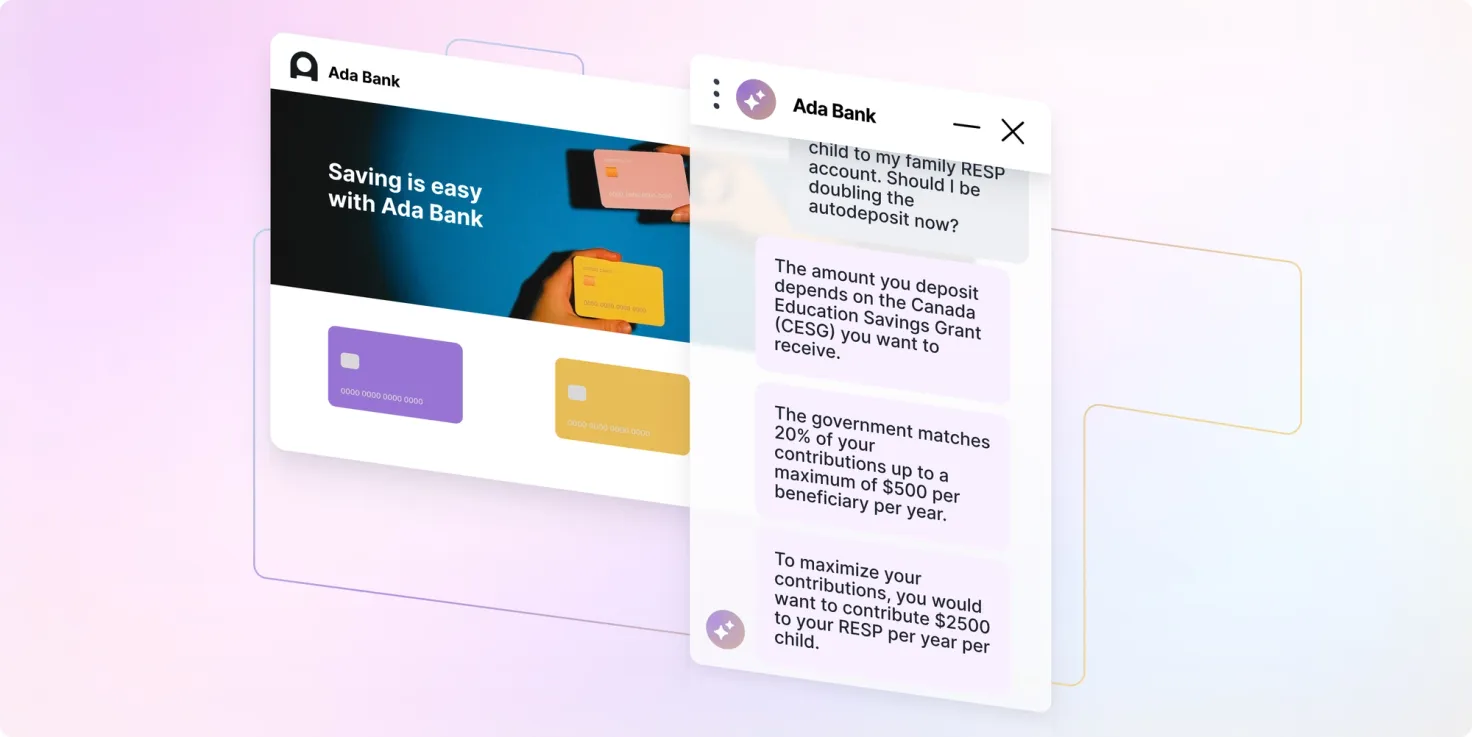
Customers expect tailored financial advice based on their individual circumstances. AI agents can analyze a user’s financial data—such as spending habits, savings, and investment portfolios—to offer personalized advice, recommendations, and alerts.
- Investment suggestions: For a user interested in growing their portfolio, the AI can recommend investment options based on the latest market trends and the customer’s risk tolerance.
- Spending alerts and budget tips: AI agents can notify users when they’re nearing their budget limits or suggest savings tips based on recent spending patterns.
Streamlined onboarding and compliance
Onboarding new customers in financial services often involves verifying documents and meeting regulatory requirements. AI agents can help streamline this process by automating document checks, validating customer information, and flagging any compliance issues.
- Automated KYC (know your customer) processes: AI agents can validate documents, cross-check information against databases, and quickly onboard customers while adhering to regulatory requirements.
- Continuous monitoring: After onboarding, AI can continuously monitor transactions for compliance risks, ensuring that the company meets legal obligations without manual intervention.
AI customer service for ecommerce
Ecommerce companies face unique challenges, from managing high support volumes to offering personalized shopping experiences. AI can transform customer service by providing seamless, personalized interactions that drive sales and improve customer retention.
Here’s how AI customer service can benefit ecommerce businesses .
Instant responses to common inquiries
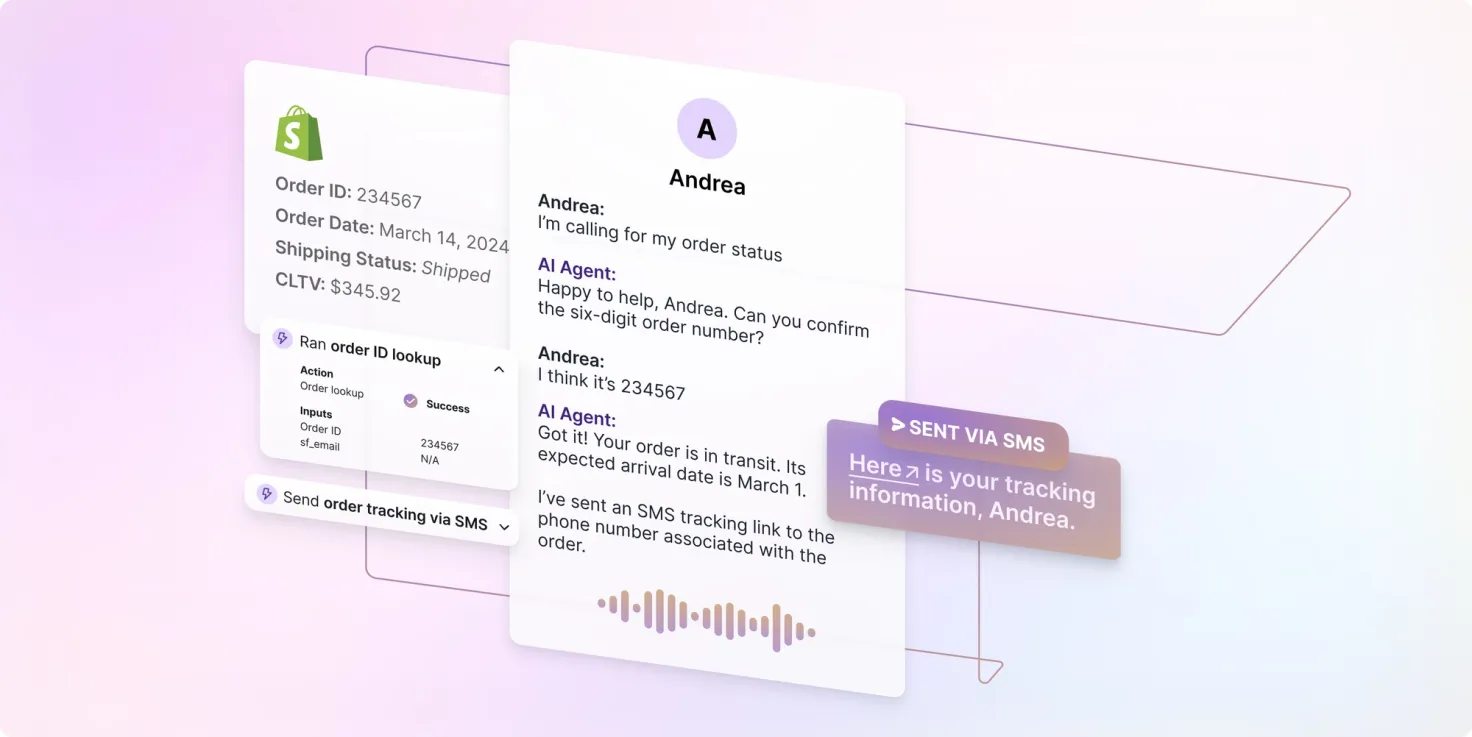
Ecommerce companies often deal with repetitive questions such as “Where is my order?” (WISMO), return policies, or product availability. AI agents can handle these common queries instantly, providing quick answers and freeing up human agents for more complex tasks.
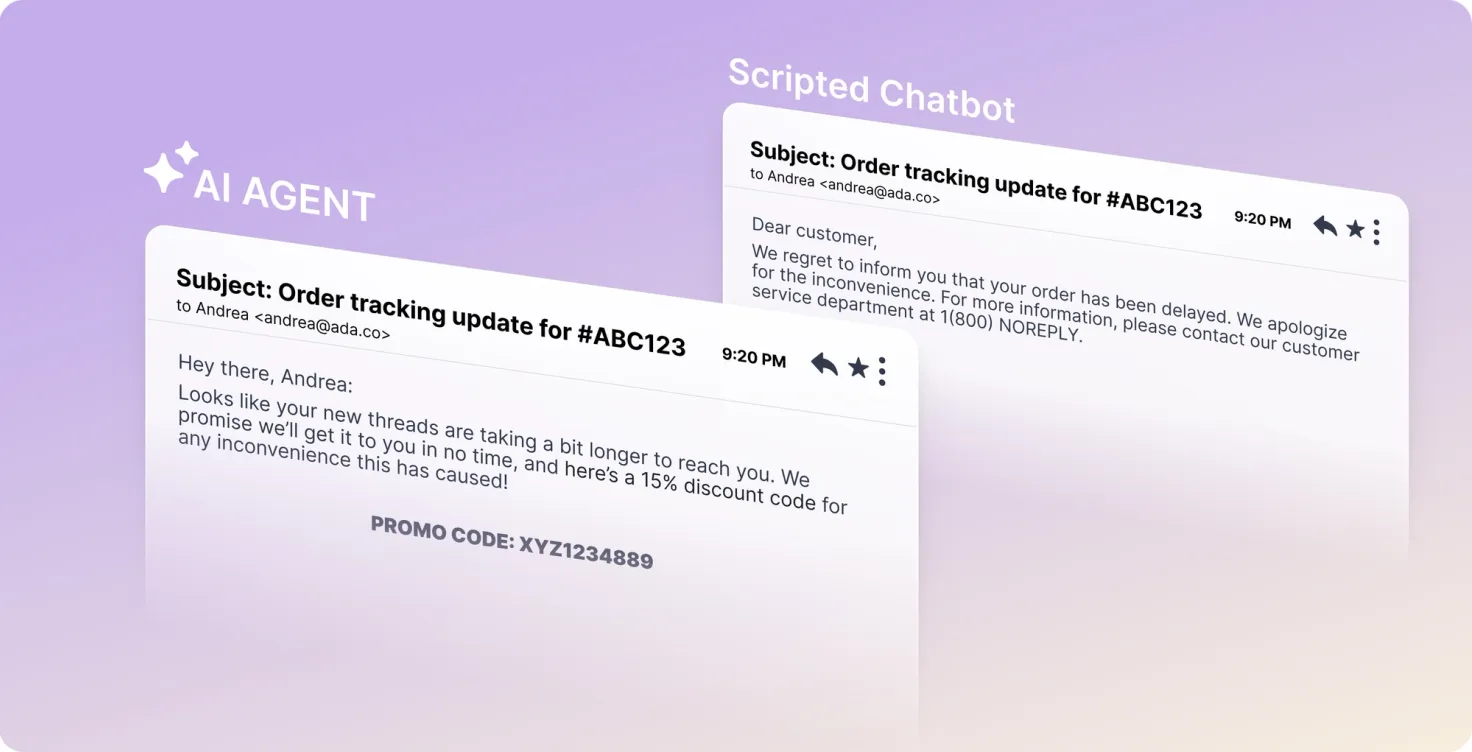
- Order tracking and updates: AI can provide real-time order status updates and even proactively notify customers of any shipping delays.
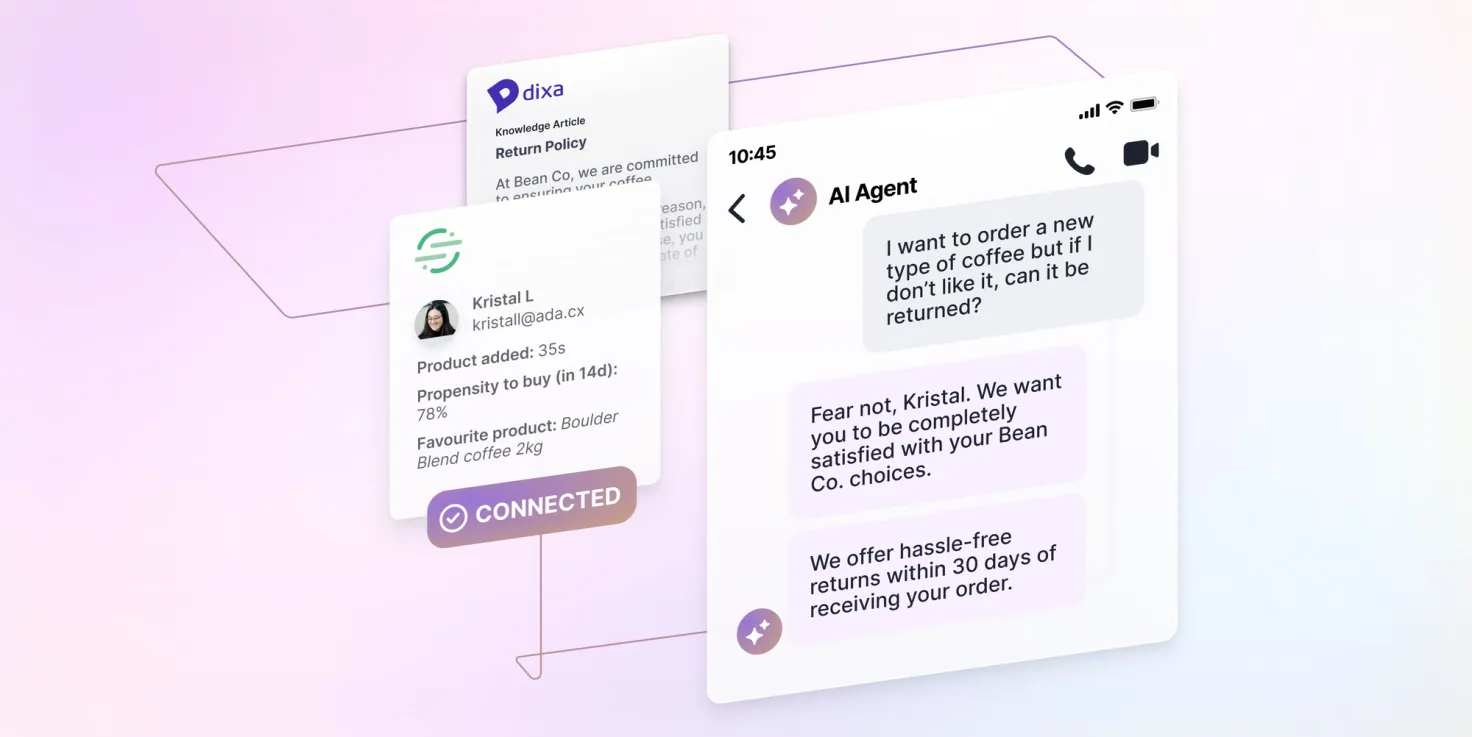
- Return and exchange automation: If a customer wants to return a product, the AI agent can guide them through the process, automatically generating return labels and updating the CRM.
Product recommendations and upselling
AI agents can analyze browsing history, past purchases, and customer preferences to offer personalized product recommendations, increasing the likelihood of a sale. This level of personalization can drive higher conversion rates and boost average order value.
- Cross-selling and upselling opportunities: Based on the customer’s interests and purchase behavior, the AI can suggest complementary products or upgraded versions of items the customer is considering.
- Dynamic discounts: The AI can provide personalized offers or discounts based on customer loyalty, cart size, or browsing activity to incentivize purchases.
Enhanced post-purchase experience
AI can continue to engage customers even after the purchase, improving loyalty and reducing returns. It can offer follow-up advice, such as setup tips for a new product, or provide relevant content on how to get the most out of the purchase.
- Automated feedback collection: AI agents can prompt customers to leave reviews, answer satisfaction surveys, or participate in loyalty programs.
- Proactive issue resolution: If a customer expresses dissatisfaction or returns a product, AI can trigger a personalized outreach from a human agent or offer a special discount to retain the customer.
IPSY’s AI customer experience delivers 943% ROI in four months
In May 2024, IPSY made the move from a scripted chatbot to an AI agent. Within weeks, CSAT began to climb and containment rates surged. IPSY’s support experience was being redefined in real time.
See their storyAI customer service for gaming
The gaming industry is highly regulated and customer-centric, with users expecting instant support, personalized experiences, and a secure environment.
AI can help gaming companies meet these demands by enhancing customer service, improving user engagement, and ensuring compliance with regulatory requirements.
Here’s how AI customer service can be effectively integrated into the gaming industry.
Real-time player support and issue resolution
Players often need assistance quickly, whether they are facing account issues, payment problems, or technical glitches. AI agents can provide real-time support without interrupting the user’s gaming experience.
- Automated troubleshooting: AI can guide users through common troubleshooting steps for resolving issues like website lag, payment errors, or login problems. For instance, if a player encounters trouble withdrawing their winnings, the AI agent can walk them through verifying their payment details or update their account information.
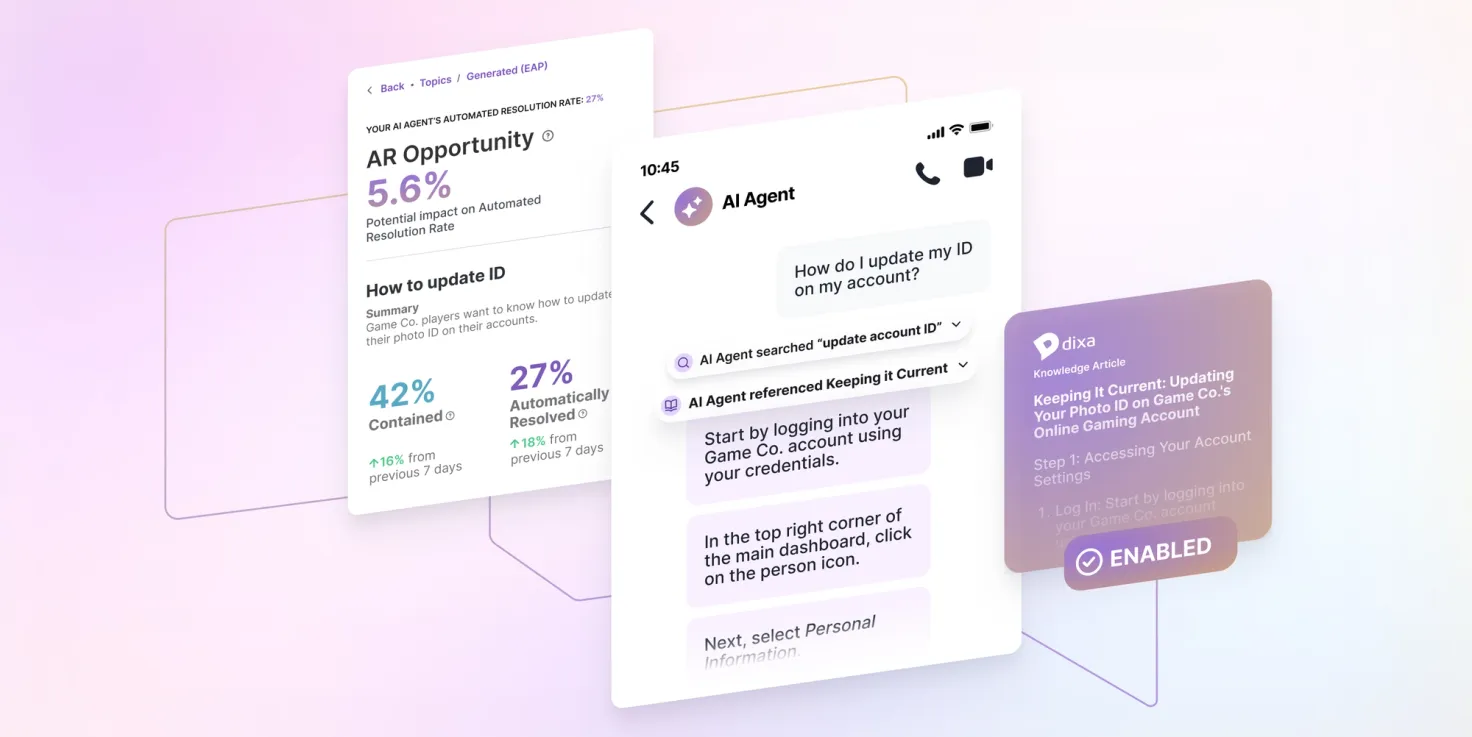
- Instant account management: Players can use AI to manage their accounts, reset passwords, recover lost login information, or update personal details instantly, ensuring a seamless experience without waiting for human support.
Personalized betting and gaming recommendations
AI agents can analyze players’ past activity, betting habits, and preferences to offer tailored suggestions, such as specific games, betting options, or tournaments.
- Dynamic betting suggestions: Based on a player’s betting history, the AI can suggest similar events or odds that align with their interests. For example, if a player frequently bets on football, the AI can recommend upcoming matches with favorable odds.
- In-game offers and promotions: AI can deliver personalized offers during gameplay, such as bonus spins in online casinos, exclusive event entries, or targeted promotions based on a user’s behavior, increasing engagement and encouraging repeat play..
Ensuring compliance and responsible gaming
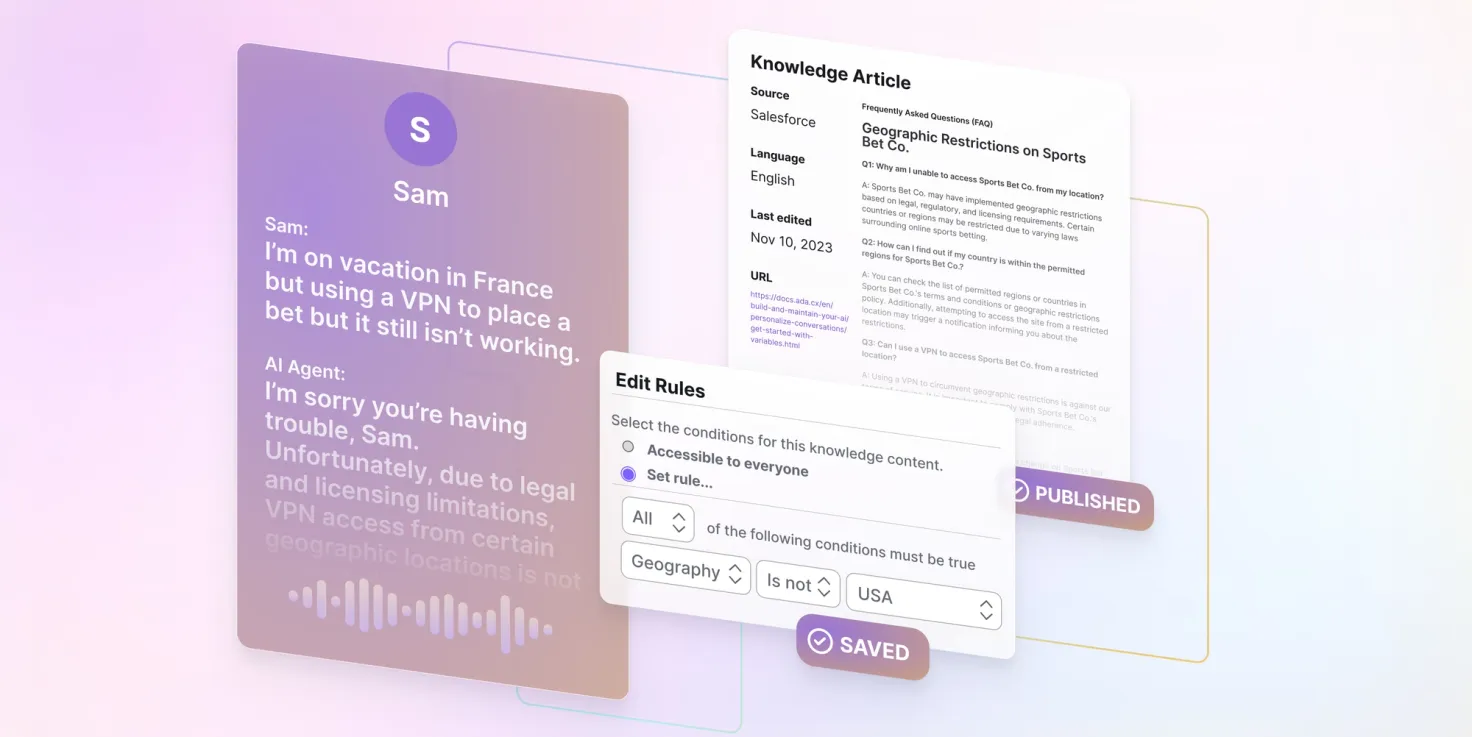
The gaming industry is heavily regulated, and compliance with local laws and responsible gaming standards is crucial. AI can help companies meet these requirements while also promoting safer gaming practices.
- Automated monitoring for regulatory compliance: AI can track and report any suspicious activity, such as unusual betting patterns that may indicate fraudulent behavior. It can also help enforce self-exclusion policies by monitoring user accounts and blocking access for players who have requested to be excluded.
- Promoting responsible gaming: AI agents can detect signs of problematic behavior by analyzing patterns such as frequent deposits, chasing losses, or extended playing sessions. When these indicators are identified, the AI can suggest cooling-off periods, set deposit limits, or notify a human agent to reach out with resources on responsible gaming.
Churn prediction and re-engagement campaigns
Player retention is a critical concern in the gaming industry, where competition is fierce, and users can easily switch to other platforms. AI can help reduce churn by identifying at-risk players and launching targeted re-engagement efforts.
- Churn prediction: AI can analyze player behavior to detect early signs of disengagement, such as reduced betting activity, fewer logins, or prolonged inactivity. With this information, the AI can trigger automated retention campaigns, such as sending personalized offers or loyalty rewards.
- Proactive outreach: For high-value players who show signs of decreased activity, AI agents can reach out with tailored incentives to encourage them to return, such as offering a free bet, bonus credits, or access to VIP events.
How can AI improve customer service efficiency?
AI improves customer service efficiency by automating high-volume, repetitive interactions while freeing human agents to focus on complex, high-value conversations. The biggest gains happen across three dimensions: speed, cost, and consistency.
- Speed: AI agents handle thousands of simultaneous conversations with no queues and no wait times.
- Cost: Unlike human staffing, AI scales without linear cost increases. You can serve 10 times the volume without 10 times the headcount.
- Consistency: With a unified reasoning engine powering every channel, customers get the same accurate, on-brand response whether they reach out via messaging, voice, or email.
The results back this up. Tilt now resolves 84% of their chat volume through AI , with an eight-point CSAT lift. Their team noted that "our Ada-powered agent not only delivers faster response times, but consistently outperforms human agents."
That's not the exception. It's what well-implemented AI customer service looks like.

Lay the groundwork for future-ready customer service
The evolution of AI in customer service is no longer a future possibility — it’s a present-day necessity.
As businesses across verticals like SaaS, FinTech, ecommerce, and gaming adopt AI, they’re finding that it goes far beyond automating responses or cutting costs. AI is transforming customer service into a strategic function that drives growth, enhances customer experiences, ensures operational efficiency, and delivers real ROI .
The brands winning this space aren't just deploying AI—they're treating agentic customer experience as a core competitive advantage. They're building AI agents that operate across every channel with consistency, resolve issues end-to-end, and improve continuously. That's what the ACX Operating Model is designed to deliver: the platform, methodology, and expertise to build AI-powered customer service that compounds in value.
The time to act is now. AI is no longer a "nice-to-have," it’s a game-changer that will define the future of customer engagement.
Don’t wait to see what your competitors do. Lead the charge and make AI the cornerstone of your customer service strategy.
the 5 dimensions of AI customer service
The key to thriving in the AI era is understanding where your current customer service operation stands and knowing exactly what’s needed to launch and grow a successful AI Customer Experience (ACX) program.
Get the guide